The ADHD Tax: What It Actually Costs and How to Shrink It
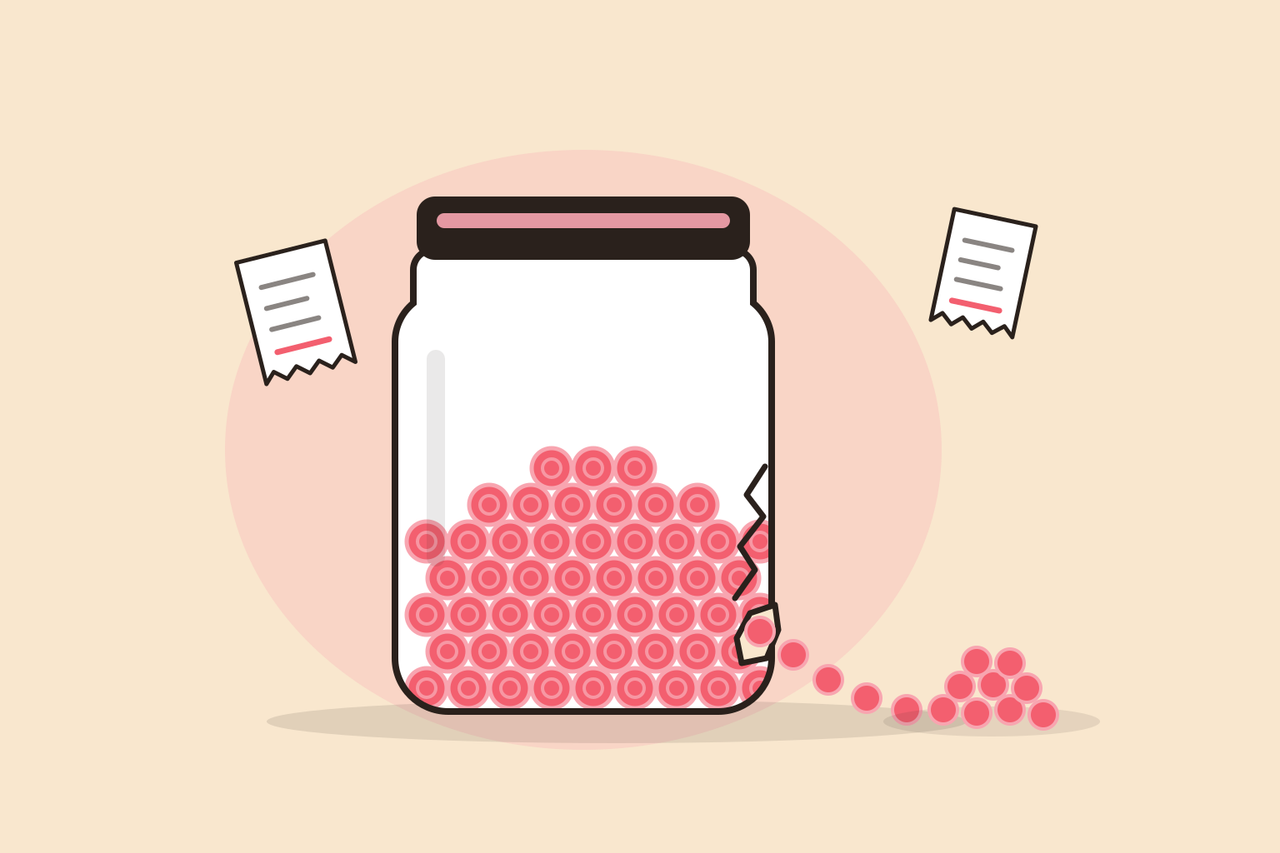
The “ADHD tax” is the name the community gave to the money that leaks out of your life because of executive dysfunction, not because of bad decisions. The late fee on a bill you could afford. The free trial that became a paid subscription eight months ago. The parking ticket. The groceries that went bad. The second phone charger because the first one is somewhere in the house.
I’ve paid all of those, some of them more than once. This post is an attempt to put a real number on the tax, show where it actually comes from, and then be specific about which leaks you can close with a system and which ones you can’t.
Bias declared up front: I build a budgeting app for brains like this. I’ll point at it once, near the end, and you can skip that part.
What it costs, measured
Most writing about the ADHD tax runs on anecdotes. There are two sources with actual numbers.
In 2022, Monzo commissioned YouGov to survey adults in the UK with and without an ADHD diagnosis. Among people with ADHD, 60% said it directly affects their finances, and they estimated the cost at about £1,600 a year, which is roughly $2,000. The comparisons are the interesting part:
- 48% said they impulse-spend often, against 12% of people without ADHD.
- 49% said they miss bill payments occasionally or often, against 18%.
- 31% said they struggle with debt, against 11%.
- 50% said they find it hard to stick to a budget, against 15%.
The second source is bigger and bleaker. A 2020 study in Science Advances used the credit records of the entire Swedish population and found that adults with ADHD had a default risk more than six times the general population by age 40. Two details from that paper matter for what follows. First, the gap widens with age; it isn’t a young-adult problem that people grow out of. Second, people prescribed ADHD medication did not have better financial outcomes than people who weren’t. Medication helps a lot of things. It does not, on the evidence, pay your bills.
I read that as: the tax is structural, it compounds, and the fix has to live in your environment rather than in your willpower.
Where the money actually goes
When I finally went through a year of my own statements, the tax sorted into four buckets. Most people I’ve talked to since recognize the same four.
1. Forgetting to pay. Late fees, interest on a card you meant to pay in full, a utility reconnection charge, a returned-payment fee. Notice that none of these require you to lack the money. The bill was affordable; it was invisible until it was late. This is the time-blindness bucket, and for most people with ADHD it’s the biggest one.
2. Forgetting to cancel. Trials that converted. Subscriptions you stopped using in March. The gym. The app you bought during a two-week hyperfocus. These are small individually and brutal in aggregate because they never announce themselves. A $12.99 charge on the 14th of every month is designed to be unremarkable.
3. Buying a replacement for something you already own. Chargers, umbrellas, water bottles, the same book twice, groceries you didn’t see behind other groceries. Object permanence problems with a price tag.
4. Impulse buys and the dopamine tax. The one everyone talks about, and in my experience a smaller share of the total than the first two. It’s just the most visible, and the one that carries the most shame.
There’s a fifth bucket that’s harder to price: the meta-tax. The hours spent on hold to reverse a fee. The mental load of dreading your bank app. The 3am spiral. That one doesn’t show up on a statement, but it’s the one that makes you avoid the statement, which feeds buckets one and two. I wrote about that loop in the financial anxiety post, and it’s why any real fix has to be gentle as well as effective.
Shrinking it: the leaks a system can close
Here is the encouraging part. Buckets one and two, the biggest ones, are almost entirely visibility problems. They respond to systems, not discipline. Here’s what has worked for me and for the people I’ve built for, in order of payoff.
Make every bill visible before it’s due, without you looking for it. The rule is simple: if it isn’t in front of you, it doesn’t exist. Whatever tool you use, the test is whether it shows you the next two weeks of bills on its own. A list you have to maintain by hand will be accurate for exactly as long as your last good week.
Autopay the fixed bills, and pre-fund the money for them. Autopay alone can cause overdrafts if the money isn’t there. The pairing that works is autopay plus an envelope that fills toward the due date, so the bill can only hit an account that already holds the money. In Cake this is an Expense slice with a due date, funded automatically from each paycheck.
Total your subscriptions once, then let something watch them. Sit down one time and list every recurring charge with its real monthly cost. It will be more than you think. Cancel what you don’t use. Then hand the watching to software that detects new recurring charges and shows you the next charge date, because you will not do the audit again next quarter, and that’s fine.
Give impulse spending a legal place to live. Trying to eliminate it fails. Giving it a fun-money envelope with a real balance works, because the question at checkout changes from “should I?” (which your brain will always answer yes) to “is there money in the envelope?” (which is a fact, not a negotiation).
Get reminded a few days before debt payments, not on the day. On the day is too late for a brain that needs a runway. Three days early is enough to move money or make the payment while you’re thinking about it, and the reminder should come from the system, not from a calendar entry you had to create.
The leaks a system can’t close
I’d be lying if I said software fixes bucket three. No app knows you already own a charger. What helps there is boring: a designated home for the things you replace most, and buying the second one on purpose so the search stops being a lottery.
And if the tax has already compounded into real debt, a budget alone isn’t the intervention. ADHD coaches and accredited financial counselors (look for the AFC credential) exist precisely for this, and the good ones treat the avoidance first and the spreadsheet second. That pairs well with a low-upkeep system; it doesn’t replace it.
Common questions
Is the ADHD tax a real thing or a meme? Both. It’s a community term, not a clinical one, but the costs it describes are measured: roughly £1,600 a year in the Monzo survey, and default rates over six times the general population in the Swedish registry data.
Does medication reduce the ADHD tax? Not according to the only large study that looked. Medicated and unmedicated adults with ADHD had similar financial outcomes. Environmental supports, meaning systems and tools, are what’s left.
What’s the single highest-payoff change? Get your next two weeks of bills in front of you automatically. Late fees and missed payments are the biggest bucket, and they’re a visibility problem, not a money problem.
What if I can’t face looking at my accounts at all? Then start with the one-number version: a tool that tells you if you’re okay today without showing you the history. The history can wait until it stops feeling like a verdict.
If the four buckets read like your last twelve months, Cake Budget was built to close the first two on its own: bills fill toward due dates from each paycheck, subscriptions are detected and totaled, and the next two weeks are always on one screen. The trial is 14 days, no card required.